How to Get Your Period Back as an Athlete: A Step-by-Step Guide
As a female athlete, you may have experienced the loss of a regular menstrual cycle. While it might not seem like a pressing concern, or even a “convenience” during competition, losing your cycle is a serious indicator of underlying internal imbalances. Though common in the fitness world, it is not normal. This guide will walk you through what hypothalamic amenorrhea is, why it happens, and exactly how to get your period back as an athlete.
Why Did I Lose My Period as An Athlete?
While it is tempting to assume that a missing period is due to only one factor, there are several biological reasons why an athlete’s cycle might stop. It is essential to understand that Hypothalamic Amenorrhea is a “diagnosis of exclusion,” meaning other medical conditions must be ruled out first.
We strongly recommend that any athlete experiencing a loss of their period visit a REDs-informed physician or endocrinologist for a formal medical diagnosis and blood work. If you are wondering how to find a REDs informed provider in your state/location, please send us an email at [email protected] and we will help find someone for you.
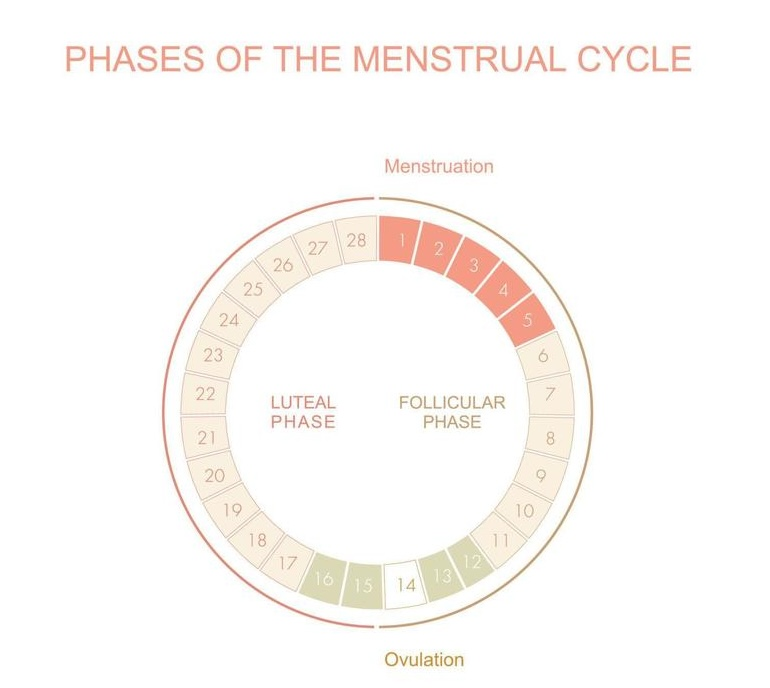
The 3 Most Common Causes of Period Loss:
1. Polycystic Ovarian Syndrome (PCOS)
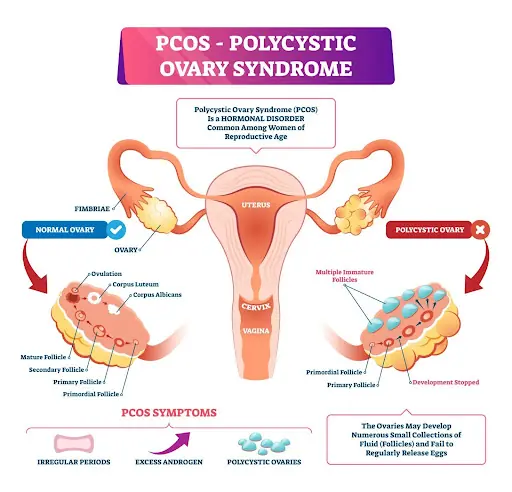
PCOS is a hormonal disorder common among women of reproductive age. Unlike HA, which is caused by an energy deficit, PCOS is often characterized by elevated levels of androgens (male hormones) and insulin resistance.
Key Difference: Athletes with PCOS may have irregular or missing periods, but they often also experience acne, excess hair growth, or excessive follicles (fluid filled sacs in the ovaries that house immature eggs) visible via ultrasound.
2. Pregnancy
It may sound obvious, but pregnancy is the leading cause of secondary amenorrhea. Even if you are training at a high intensity, it is possible to become pregnant if you are ovulating. A simple pregnancy test is the first step in any clinical evaluation of a missing period.
3. Hypothalamic Amenorrhea (HA)
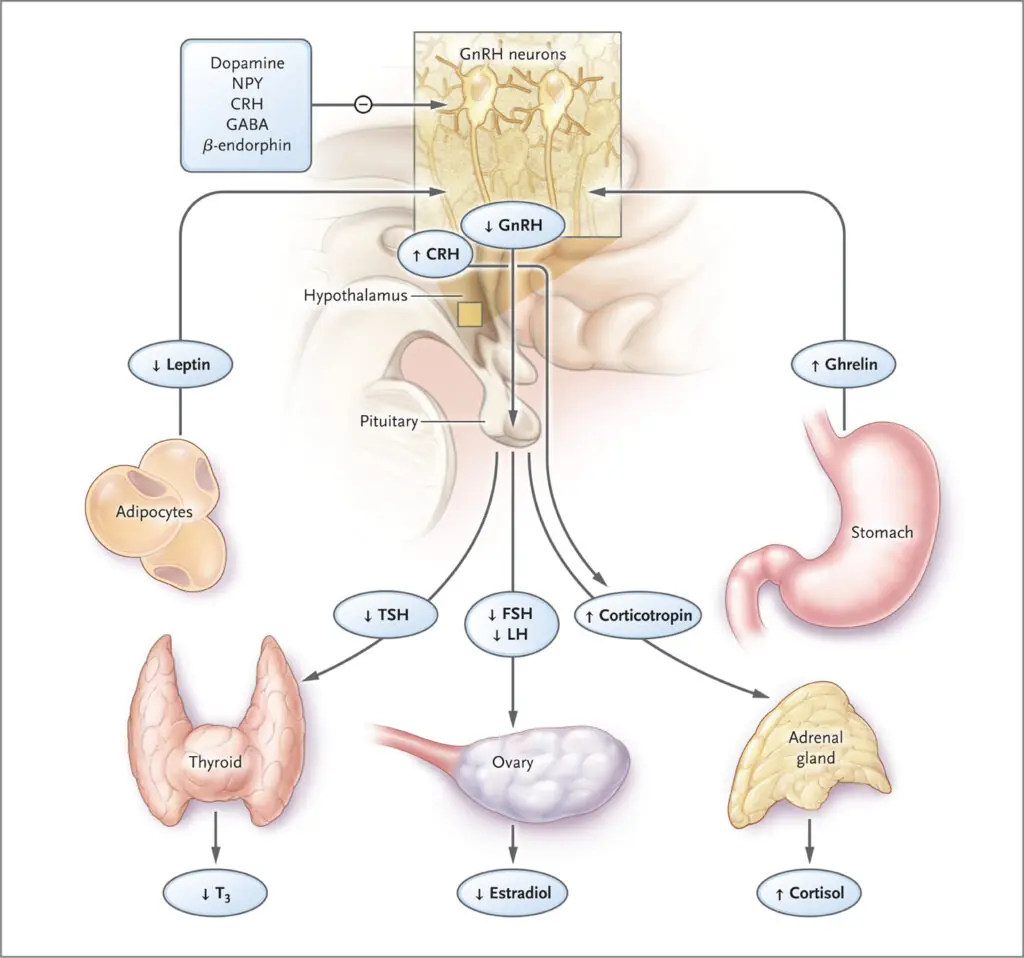
This is the most frequent cause for athletes and is purely functional. It occurs when the brain perceives the body is under too much stress—usually from Low Energy Availability (LEA). The hypothalamus stops producing the hormones needed to stimulate the ovaries.Key Difference: Unlike PCOS, HA usually presents with very low levels of estrogen and luteinizing hormone (LH). This is why a blood panel is so important to distinguish between the two.
Why a Medical Diagnosis Matters
As Performance Dietitians, we work alongside your medical team to ensure your recovery plan is safe. A physician can run a full “Female Athlete Hormone Panel” to check your thyroid function, prolactin levels, and bone density (via a DXA scan). If your period loss is due to PCOS rather than HA, the nutritional approach is significantly different. Getting the right diagnosis ensures you aren’t “fueling for HA” when you actually need to be “managing blood sugar for PCOS.”
What is Hypothalamic Amenorrhea (HA)?
Hypothalamic Amenorrhea is the clinical term for when the hypothalamus (the master control center in your brain) stops signaling for a menstrual cycle. It is a protective mechanism; when your body enters an energy deficit, it shuts down “non-essential” functions like reproduction to prioritize your heart, lungs, and brain.
Primary Amenorrhea
Primary amenorrhea is when a young athlete reaches age 15 and has not yet had her first menstrual period. In athletes, this is often due to high training volumes and insufficient fueling during puberty, which delays the initial “startup” of the hormonal system.
Secondary Amenorrhea
Secondary amenorrhea is the most common form seen in adult athletes. It is defined as the absence of a period for 3 or more consecutive months in someone who previously had a regular cycle. This is a clear sign that the body’s “safety switch” has been flipped due to stress or low energy availability.
Other Symptoms of HA
Menstrual loss is rarely the only symptom. Look out for these early warning signs:
- Bone Stress Injuries: Recurrent stress fractures are a major red flag for low estrogen.
- Mental Health Shifts: Increased anxiety, depression, or irritability.
- Physical Changes: Hair loss, feeling cold all the time, and low sex drive.
How to Get Your Period Back as an Athlete: 4 Essential Strategies
If you are wondering how to get your period back, the answer lies in restoring “Energy Availability.” Here is how to start:
1. Increase and Optimize Fuel Intake
Proper fueling is the #1 step in how to get your period back. You must prove to your brain that food is abundant. The two biggest mistakes we see among athletes when it comes to fueling for HA recovery is an intake too low in calories and too low in carbohydrates.
Eat Enough Calories
Your intake must match your training volume plus your body’s basic metabolic needs. Your body needs a minimum of 30 kcal per kilogram of fat free body mass to function efficiently. Optimal intake for athletes should be around 45 kcal per kilogram of fat free body mass.
Ovulation is Fueled By Carbohydrates
Carbohydrates are the primary fuel source for both the hypothalamus and exercise. Low-carb diets are a frequent trigger for HA because the body does not enough carbohydrates and energy to fuel bodily function alongside exercise. Most athletes need minimum 5-7g of carbohydrates per kilogram of bodyweight per day.
Though many athletes are far off from meeting their carbohydrate and calorie needs, we recommend making small sustainable changes. It can feel scary and uncomfortable to make big jumps in upping fuel intake. When you jump in too fast, it’s tempting to fall back into more “comfortable”, though unhealthy, nutrition behaviors. We find many athletes make this mistake and it prevents them from staying consistent in their journey.
Consistency is essential for your energy deficit to reverse and for your body to feel like it is safe enough to ovulate. Small sustainable and individualized changes allow for this to happen.
2. Strategic Exercise Modifications
Recovery doesn’t always mean stopping activity altogether, but it does mean finding a balance. At Steady State Performance Nutrition, we prefer to help you implement nutritional changes first to see if we can sustain your training. Many athletes find more ease and motivation with fueling changes when they are able to train.
We recommend 1–2 full recovery days per week to optimize recovery and allow for quality training sessions to take place while working on regaining your menses.
3. Prioritize Mental Health and Stress Management
The hypothalamus is extremely sensitive to stress. Healing your relationship with food and exercise is often an important first step. If you feel guilty for eating more or anxious about missing a workout, your body stays in a “fight or flight” state, which keeps your hormones suppressed.
Managing mental stress on your own can be challenging. Many athletes find themselves falling into the pattern of “stressing about their stress”. Just like with fueling and exercise, a small sustainable approach works well for implementing mental health techniques.
4. Get Professional Support
Getting your period back is a complex process. A support system of Athletic Trainers, Psychologists, and Sports Dietitians can provide the roadmap you need. We help take the guesswork out of “how much to eat,” which decreases the overwhelm of recovery.
Frequently Asked Questions About Period Recovery
How much do I need to eat to get my period back?
There is no “magic number” of calories, as every athlete’s metabolic floor is different. However, the goal is to move out of Low Energy Availability (LEA). This typically requires a minimum of 45 calories per kilogram of Fat-Free Mass (FFM) daily. For most active women, this means consuming significantly more than 2,000 calories, prioritizing dense carbohydrates and healthy fats to signal “safety” to the hypothalamus.
Can I get my period back without gaining weight?
While the focus is on energy availability rather than a number on the scale, most athletes with HA are below their biological “set point.” For your brain to feel safe enough to restart reproduction, it often requires a small increase in body fat percentage. Remember: your “racing weight” may not be your “hormonally healthy weight.”
Does “Provera” or the “10-day progesterone challenge” fix HA?
No. A “Provera challenge” is a diagnostic tool used by doctors to see if you have enough estrogen to build a uterine lining. If you bleed after taking it, it means you have some estrogen; if you don’t, your levels are likely very low. However, this is not a cure. It does not restart your natural ovulation cycle or fix the underlying energy deficit.
How do I know if I’m eating enough for recovery?
In addition to the hypothalamic amenorrhea recovery signs like increased hunger and improved sleep, you should look for improved performance in the gym. If you are hitting personal bests and recovering quickly between sessions, it is a sign your energy availability is improving. If you are chronically sore and fatigued, you likely need more fuel.
Should I take birth control to get my period back as an athlete?
A common misconception is that the birth control pill “fixes” HA. It does not. The bleed you experience on the pill is a withdrawal bleed, not a natural menstrual period. It is a response to synthetic hormones and does not mean your body has restored its own hormonal signaling. Importantly, the pill masks the underlying energy imbalance. If you don’t address the fueling issue, your bones and heart remain at risk even if you are bleeding on the pill.
Conclusion
Losing your period is a meaningful signal that your body needs more support. Recovery starts with a mindset shift, followed by intentional fueling and the right professional guidance.
Are you struggling to find the right balance? If you have been trying to recover on your own for 2+ months and aren’t seeing progress, we are here to help. Our Period Recovery Program is designed specifically for athletes who want to perform at their best while maintaining long-term hormonal health.
Period Recovery Program
Learn more about performance nutrition and how you can get your period back while continuing to train!