
Hypothalamic Amenorrhea Recovery Signs: A Guide for Athletes
As Sports Dietitians, a significant part of our work involves supporting female athletes through hypothalamic amenorrhea (HA). Our goal is to help you restore your menstrual cycle and return to full participation in your sport with optimal energy. For athletes on a period recovery journey, this post covers what HA is, how to support the process, and the specific hypothalamic amenorrhea recovery signs that indicate your body is responding positively.
What is Hypothalamic Amenorrhea (HA)?
Hypothalamic Amenorrhea (HA) is the absence of a menstrual period for three or more consecutive months. In athletes, it is typically caused by Functional Hypothalamic Amenorrhea, triggered by a combination of factors
- Chronic inadequate energy intake (Low Energy Availability)
- Prolonged intense exercise
- High psychological or physical stress
Loss of a regular menstrual cycle is a clear sign of decreased health. When the body cannot sustain adequate energy, it deprioritizes reproductive function to protect critical systems like the brain, heart, and lungs. Your body essentially “shuts down” the hormonal signaling required for a normal cycle to save fuel.
Common Symptoms of HA
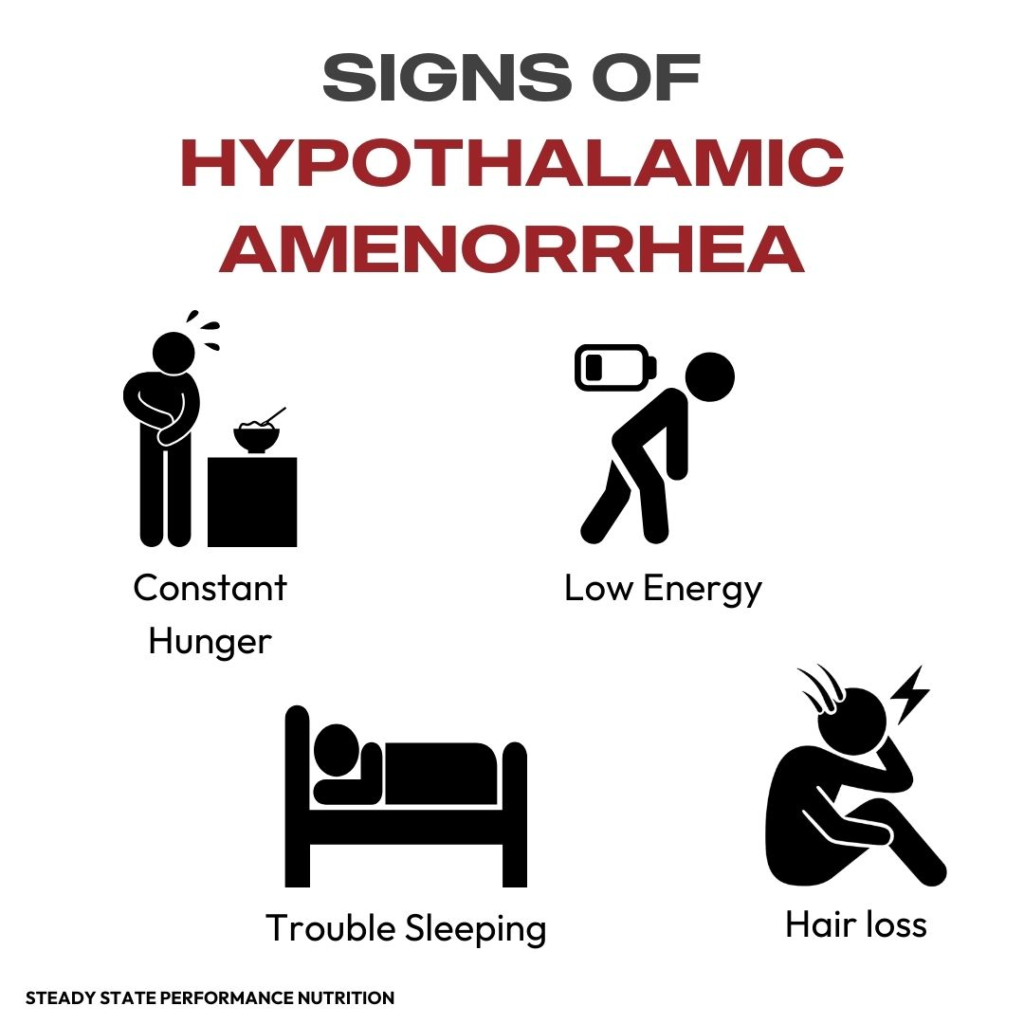
While the absence of a period is the defining feature, athletes with HA often experience “red flags” before and during the condition, including:
- Increased anxiety or depression
- Constant low energy or fatigue
- Trouble falling or staying asleep
- Extreme hunger or “food preoccupation”
- Thinning hair or brittle nails
- Low sex drive (libido)
How to Support HA Recovery
Recovery requires correcting the energy imbalance. This means increasing energy intake, reducing training load, or both. For athletes in season, nutritional strategies are the most vital tool.
Practical ways to increase energy intake:
- Eat every 2–3 hours: Incorporate 2–3 snacks daily between meals.
- Focus on energy-dense foods: Choose foods high in healthy fats and carbs to get more calories in less volume. Examples include avocado, nut butters, seeds, oils, and full-fat dairy.
- Intra-workout fueling: Fueling before, during, and after training is essential for performance and signaling safety to your hypothalamus.
- Liquid calories: Use smoothies, 100% juice, and sports drinks to add easily digestible energy.
Key Hypothalamic Amenorrhea Recovery Signs to Watch For
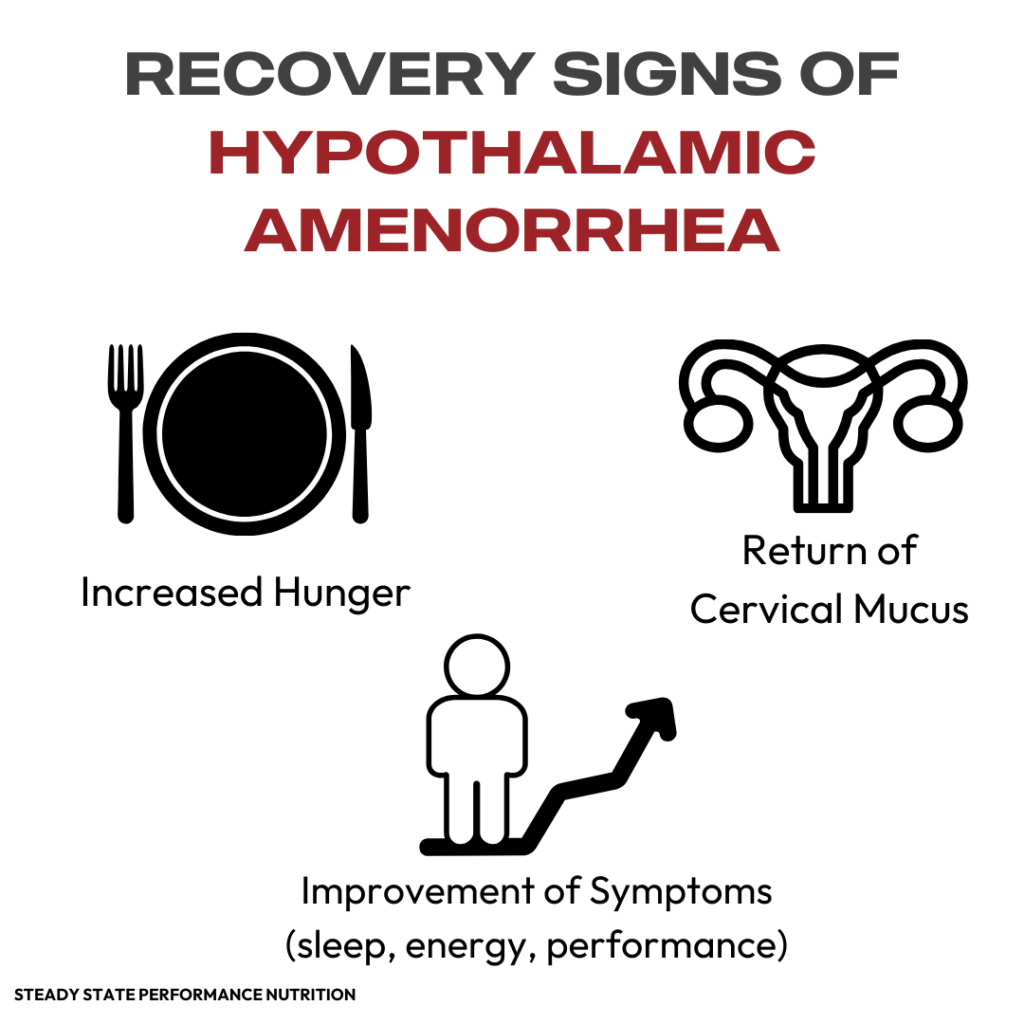
Recovery can be a slow process. It is important to recognize that internal healing happens before the return of a full menstrual cycle. Here are the most common hypothalamic amenorrhea recovery signs that indicate your hormones are normalizing:
1. Increased Hunger and “Extreme Hunger”
This is often one of the earliest signs of HA recovery. As energy intake increases, your metabolism “wakes up,” leading to an increase in appetite or “extreme hunger.” You might find yourself thinking about food constantly or feeling unsatisfied even after a large meal; this is your body’s way of demanding the “back-pay” of energy it was denied during your period of restriction. It is a vital signal that your body is re-learning its hunger and satiety cues.
2. Improved Sleep and Energy Levels
Keep an eye out for better sleep quality and more sustained energy throughout the day. When your body is in a state of low energy availability, it stays in a “fight or flight” mode, pumping out stress hormones like cortisol that keep you wired but tired. As you fuel more, these stress hormones stabilize, allowing you to fall asleep faster and wake up feeling actually restored rather than needing to rely on caffeine.
3. Changes in Basal Body Temperature (BBT)
While not everyone tracks this, a slight rise in your resting body temperature can indicate your metabolic rate is increasing and your thyroid hormones are stabilizing. A body in “energy conservation mode” often runs cold. This is why you might notice your hands and feet are always freezing. As recovery progresses, your core temperature rises, and that chronic “chilled to the bone” feeling begins to disappear.
4. Return of Cervical Mucus
Cervical mucus production is regulated by estrogen. Its return (often described as a “slippery” or “egg-white” consistency) is a reliable indicator that estrogen levels are rising and the hormonal signaling required for ovulation is resuming. You may notice this several weeks or even months before your actual period returns; think of it as your body “testing the pipes” before the main event.
5. Improved Mood and “Brain Fog” Lifting
One of the most profound hypothalamic amenorrhea recovery signs is a shift in your mental state. When the brain is starved of energy, it becomes irritable, anxious, and prone to “brain fog” or difficulty concentrating. As you restore energy balance, you’ll likely notice an increased capacity to handle stress and a return of your personality and sense of humor, as the brain finally has the glucose it needs to function optimally.
Frequently Asked Questions About HA Recovery
How long does it take to see hypothalamic amenorrhea recovery signs?
The timeline for recovery varies for every athlete, but early hypothalamic amenorrhea recovery signs like increased hunger and improved sleep can appear within 2–4 weeks of consistent increased fueling. However, the return of a full menstrual cycle typically takes anywhere from 3–6 months (or longer) of sustained energy availability and reduced stress.
Can I still exercise while recovering from HA?
While total rest is often the fastest route to recovery, many athletes can recover by significantly reducing high-intensity training and prioritizing “mechanical” fueling. The key is ensuring your energy intake exceeds your energy output. If you continue to train at high intensities without seeing recovery signs, a further reduction in exercise may be necessary.
Why am I so hungry during HA recovery?
This is often referred to as “extreme hunger.” After a period of chronic under-fueling, your body’s hunger hormones (like ghrelin) increase while fullness hormones (like leptin) decrease. This is a survival mechanism designed to ensure you consume enough energy to restore depleted glycogen stores, rebuild muscle, and restart your reproductive system.
Is discharge a sign that my period is coming back?
Yes! Noticing “egg-white” or slippery cervical mucus is one of the most reliable hypothalamic amenorrhea recovery signs. This discharge indicates that your ovaries are producing estrogen, which is the primary hormone needed to build the uterine lining before ovulation and menstruation can occur.
Do I have to gain weight to recover from HA?
For many athletes, HA occurs because they are below their body’s “set point” weight or have too little body fat to support hormonal signaling. While the focus should be on energy availability rather than a specific number on the scale, some weight gain is often a necessary and healthy part of the biological “safety signal” your brain needs to restart your cycle.
Conclusion: Your Path to Period Recovery
Recovering from hypothalamic amenorrhea is a journey that requires patience, but it is entirely achievable with a consistent fueling plan and reduced stress. By recognizing these hypothalamic amenorrhea recovery signs, you can stay motivated, knowing that critical progress is happening under the surface even before your cycle fully returns.
Ready to Fast-Track Your Recovery?
While every body is different, if you have been consistently increasing your energy intake and adjusting your training for two months or more without experiencing at least two of the recovery signs listed above, it may be time for a more individualized approach.
As Performance Dietitians, we specialize in helping female athletes navigate the nuances of Low Energy Availability (LEA). If you’re feeling stuck or unsure if your fueling strategy is enough, we invite you to apply for our Period Recovery Program. Let’s work together to restore your health, optimize your performance, and get your cycle back on track.
Period Recovery Program
Learn more about performance nutrition and how you can get your period back while continuing to train!