Hypothalamic Amenorrhea Recovery Signs
As Performance Dietitians, a significant part of our work involves supporting female athletes through hypothalamic amenorrhea (HA). We help them restore their menstrual cycle and return to full participation in their sport. For athletes on their period recovery journey, this post covers what HA is, how to support recovery, and early signs that your body is responding positively.
What is Hypothalamic Amenorrhea (HA)?
Hypothalamic Amenorrhea or HA is the absence of a menstrual period for 3 or more consecutive months. It is typically caused by a combination of factors, including chronic inadequate energy intake, prolonged intense exercise, and hormonal disruption.
Loss of a regular menstrual cycle is a clear sign of deceased health. When the body cannot sustain adequate energy availability, it deprioritizes reproductive function in order to protect critical systems (i.e., the brain, heart, lungs, and digestive tract). Your body is aware that it is no longer able to sustain a pregnancy due to inadequate energy intake, causing a reduction in hypothalamic hormone secretion, which disrupts the hormonal signaling required for a normal cycle. As such, menstruation is one of the first processes to be suppressed.
Symptoms of HA
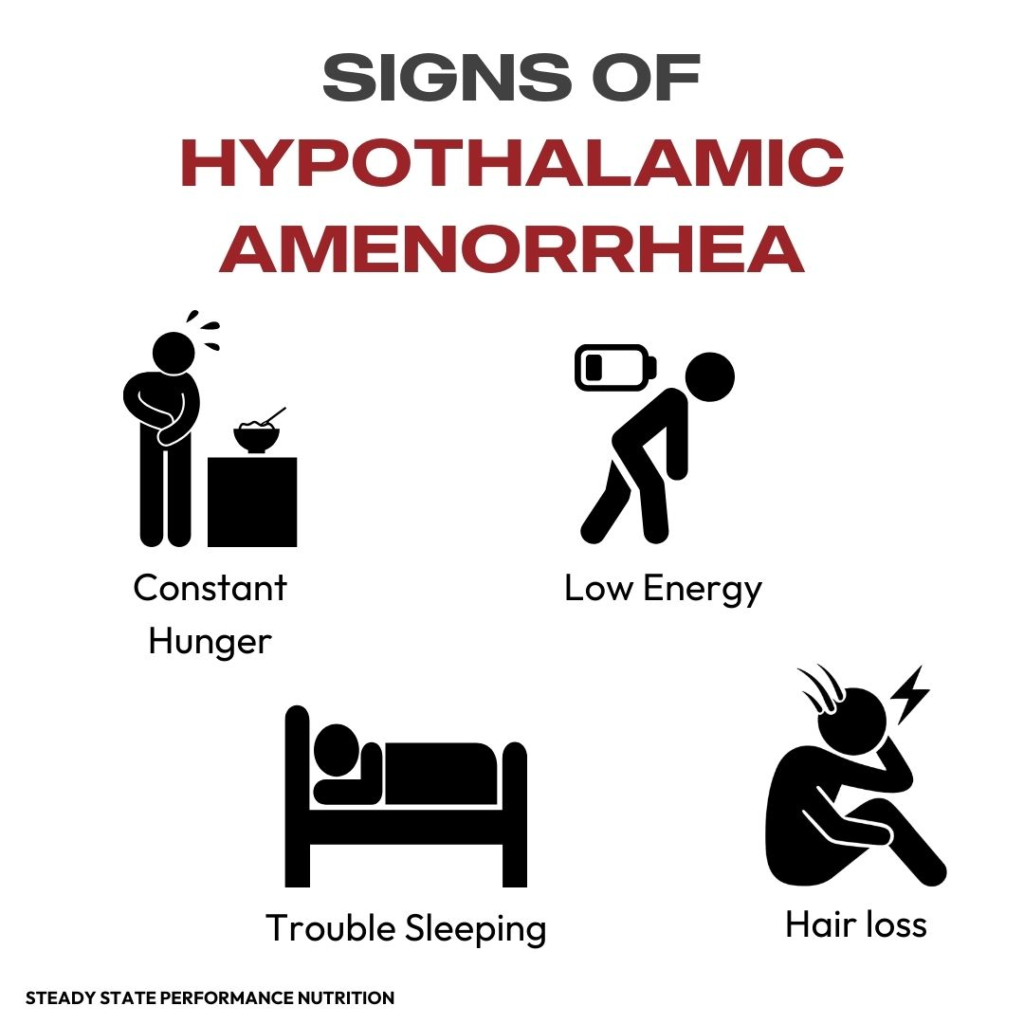
Menstrual loss is the defining feature of HA, but it is rarely the only symptom. Athletes with HA commonly experience
- Anxiety and Depression
- Low energy
- Trouble sleeping
- Hunger
- Hair loss
- Low sex drive
How Can I Recover?
Recovery from HA requires correcting the energy imbalance that triggered it. This means increasing energy intake, reducing training load, or a combination of both. For athletes in season, significantly reducing training may not be entirely feasible, making nutritional strategies particularly important.
Practical approaches to increasing energy intake include:
- Eating every 2-3 hours. This can be accomplished by incorporating 2-3 snacks a day.
- Focus on calorie-dense foods (mainly higher in carbs and fats), with less volume.
- Some of our favorite energy-dense foods include
- Avocado
- Peanut Butter
- Seeds/nuts
- Oils
- Tortillas
- Honey
- Rice
- Bread
- Liquid energy (full-fat milk, sports drinks, 100% juice)
- Some of our favorite energy-dense foods include
- Fuel consistently before, during, AND after training. Training is a large reason you require more energy compared to non-athletes, so using these opportunities to intake more calories is essential and will improve performance.
- Include calorie-containing beverages in addition to water such as juice, smoothies, and sports drinks. These are easy and efficient ways to add calories in an easily digestible way.
How Do I Know I am Recovering? HA Recovery Signs
Recovery from HA can be a slow process, so it is important to recognize that progress often comes before return of a full menstrual cycle. There are several early indicators that your body is beginning to normalize hormonally:
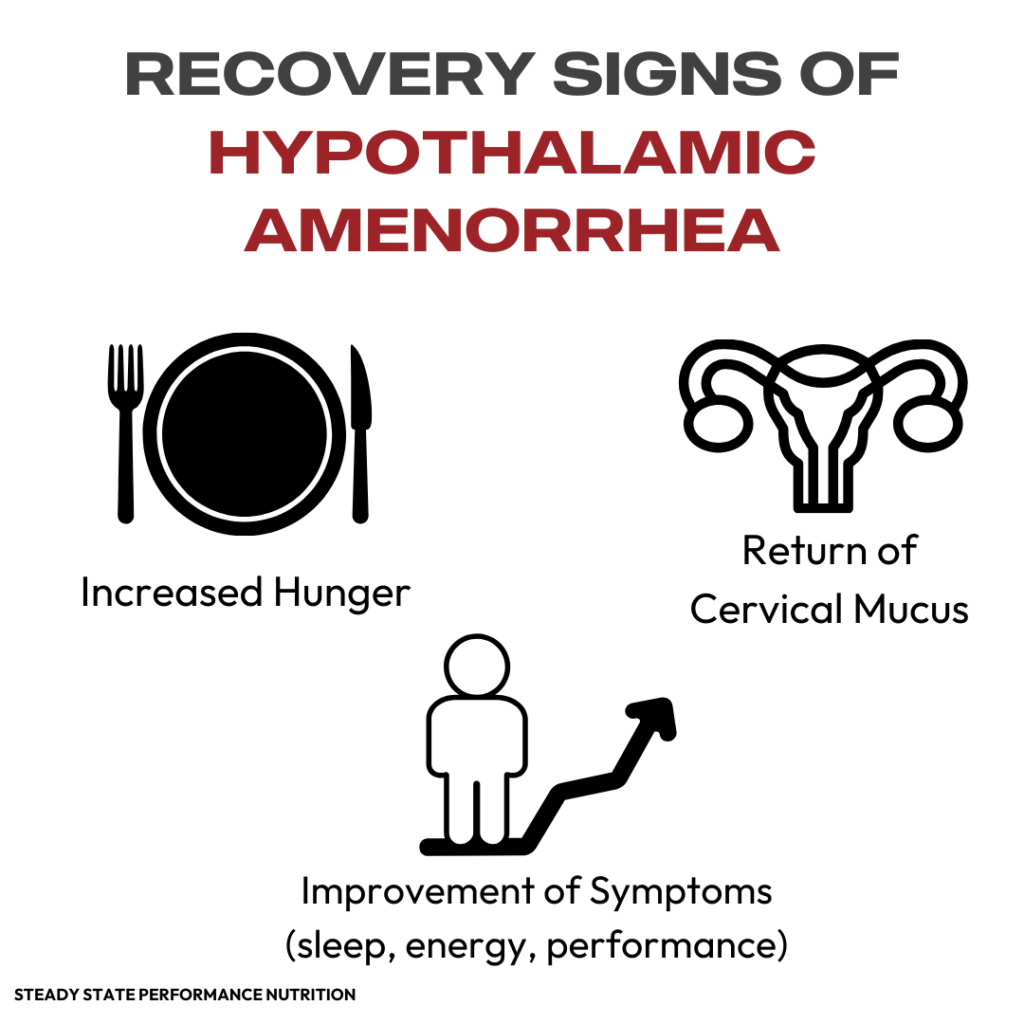
- Increased hunger. This is one of earliest signs. As energy intake increases, metabolism also increases in response to greater fuel availability. This leads to increases in appetite. This is a positive signal! It may feel like you are hungry all the time, but this is just a sign that your body is re-learning its hunger and satiety cues and telling you when it is time to eat!
- Improvements in other HA-related symptoms. Things to keep an eye out for are better sleep quality, more sustained energy throughout the day, or reduced anxiety. These all reflect gradual hormonal recovery, even before menstruation returns.
- Return of cervical mucus. Cervical mucus production is regulated by estrogen, and its absence is common in HA. When it begins to return, it is a reliable indicator that estrogen levels are recovering and normal reproductive function is resuming.
Conclusion
A diagnosis of hypothalamic amenorrhea can feel discouraging, but recovery is achievable with the right approach. Addressing the energy imbalance is the key to recovery. Through increased fueling, training adjustments where possible, and appropriate professional support, your body can restore normal hormonal function. Knowing what signs to look for along the way can make the process feel more manageable and help you recognize that progress is happening, even before your cycle fully returns.
Period Recovery Program
Learn more about performance nutrition and how you can get your period back while continuing to train!